
The Revolutionary Art of Fashion Preservation: When Designers Become Collectors
The fashion world has embraced the term “archival” with unprecedented enthusiasm in recent years. From runway collections drawing inspiration from historical pieces to celebrity stylists sourcing vintage treasures for red carpet moments, the concept of preserving fashion history has never been more mainstream. However, this contemporary obsession with fashion archives represents a dramatic shift from industry practices of decades past, when most designers barely considered documenting their own creative output.
What strikes me as particularly fascinating is how this transformation highlights a fundamental misunderstanding about what true fashion preservation actually entails. Today’s “archival” references often feel superficial—a quick Instagram post or auction house mention rather than the deep, scholarly approach that genuine preservation requires. This matters enormously for fashion students, historians, and anyone who believes that clothing represents more than mere commerce.
The Pioneer Who Changed Everything
The late Tunisian-French designer who revolutionized women’s silhouettes through innovative bodycon designs and technical fabrics represents perhaps the most extraordinary example of fashion preservation in modern history. Unlike his contemporaries, this visionary began systematically collecting and preserving garments from the very beginning of his career—a practice virtually unheard of at the time.
What sets this designer apart wasn’t just his meticulous documentation of his own work, but his passionate acquisition of pieces from masters he revered: Cristóbal Balenciaga, Christian Dior, Thierry Mugler, and Madame Grès. This collecting began in the late 1970s, remarkably preceding even Dior’s own institutional archiving efforts by nearly a decade. I find this particularly telling about the designer’s understanding of fashion as art worthy of preservation and study.
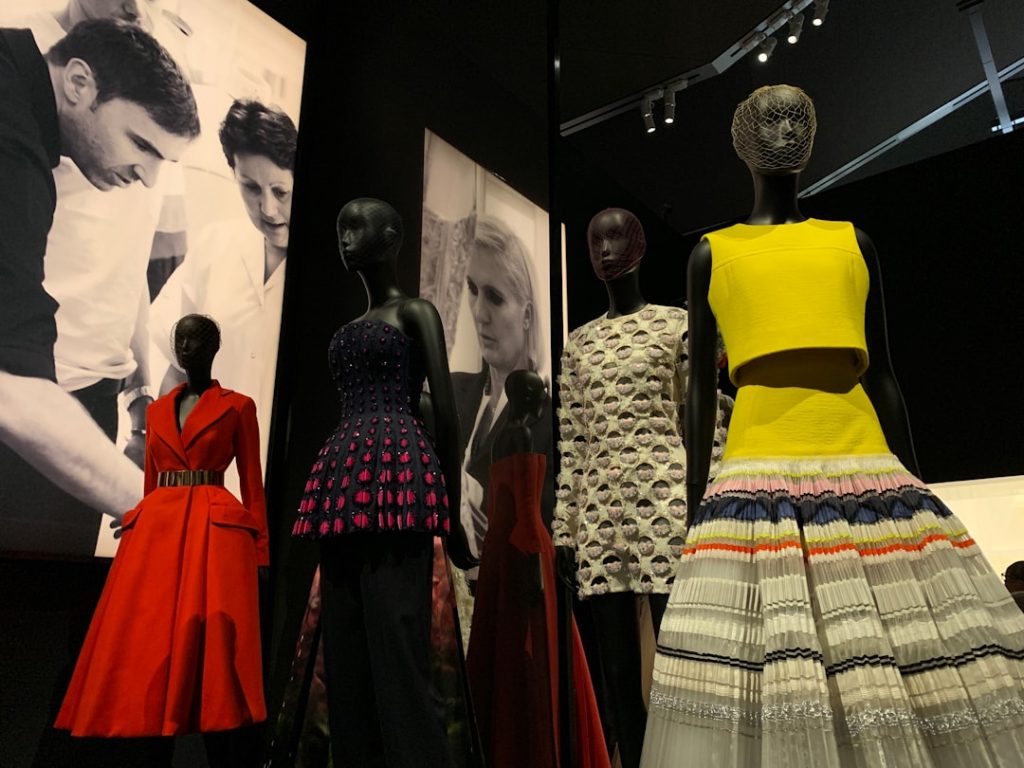
The foundation established in his name in 2007 now serves as a remarkable repository of fashion history, presenting exhibitions that create dialogues between different masters of couture. Their most recent exhibition, exploring the relationship between this designer’s work and that of Christian Dior, exemplifies how proper archival work can illuminate creative connections across generations.

Why This Matters More Than Ever
For fashion professionals and serious enthusiasts, this approach to preservation offers invaluable insights that simply cannot be gleaned from photographs or digital reproductions. The ability to examine construction techniques, fabric choices, and proportional relationships up close provides education that no fashion school textbook can match. This is particularly relevant for emerging designers who need to understand the craft foundations underlying great fashion.
However, I believe this level of archival dedication isn’t for everyone. Casual fashion consumers or those primarily interested in trends rather than technique may find such deep historical study overwhelming or unnecessary. The real beneficiaries are those committed to understanding fashion as both craft and art form.
The Technical Revolution
The comparison between this designer’s work and that of Christian Dior reveals fascinating parallels and contrasts. Both revolutionized fashion for their respective eras—Dior with his post-war return to feminine silhouettes featuring defined waists and full skirts, and his later counterpart through stretch fabrics that allowed unprecedented freedom of movement while maintaining sculptural precision.
What I find most compelling is how both designers achieved similar aesthetic goals through completely different technical means. Dior relied on traditional corsetry and structured foundations, while the later designer eliminated the need for such undergarments entirely through revolutionary fabric manipulation and cutting techniques. This represents a fundamental shift in how fashion can shape the body while enhancing rather than restricting movement.
Learning Through Collection
The self-taught nature of this designer’s education through collecting presents a masterclass in how serious practitioners can develop their skills. Rather than formal fashion school training, he learned by studying and acquiring masterpieces, then reverse-engineering their construction methods. This approach benefited him enormously, but I’d argue it requires exceptional dedication and financial resources that make it impractical for most aspiring designers.

For fashion historians and curators, however, this collecting methodology created an unparalleled resource. The foundation now houses what many consider the world’s most significant private collection devoted to fashion history, containing hundreds of masterpieces that extend far beyond what individual fashion houses preserved themselves.
The Craft Revival
In our current digital-dominated fashion landscape, where social media imagery often drives design decisions, the emphasis on physical craftsmanship and hands-on technique becomes increasingly valuable. I believe this trend toward homogenization across brands—where everything starts to look similar because it’s all inspired by the same digital sources—makes archival study more crucial than ever.
The foundation’s approach of allowing visitors close access to garments, rather than displaying them behind glass, represents a bold commitment to education over pure preservation. This philosophy particularly benefits fashion students and young designers who need to understand construction techniques that can only be appreciated through proximity to the actual garments.
For established fashion houses, this archival approach has become essential for maintaining brand identity and inspiring future collections. However, smaller designers or those focused on fast fashion may find such extensive documentation financially prohibitive or strategically unnecessary.
The Future of Fashion Preservation
The exhibition model pioneered by this foundation—creating dialogues between different masters rather than simply displaying individual collections—offers a template for how fashion museums might evolve. This approach treats fashion as fine art deserving of serious scholarly attention, which I believe elevates the entire industry’s cultural standing.
Yet this level of institutional support and curatorial sophistication remains accessible primarily to major fashion capitals and well-funded institutions. Regional fashion scenes and emerging designers may struggle to implement such comprehensive preservation strategies, potentially creating gaps in fashion history documentation.
The transformation from an era when most designers kept no archives to today’s “archival” obsession reflects fashion’s growing recognition of its cultural significance. However, true preservation requires the kind of systematic dedication and scholarly approach demonstrated by this pioneering designer—a commitment that extends far beyond social media hashtags or auction house marketing.
Photo by John Cameron on Unsplash
Photo by Anne Laure P on Unsplash